A Church Born from Industry and Faith
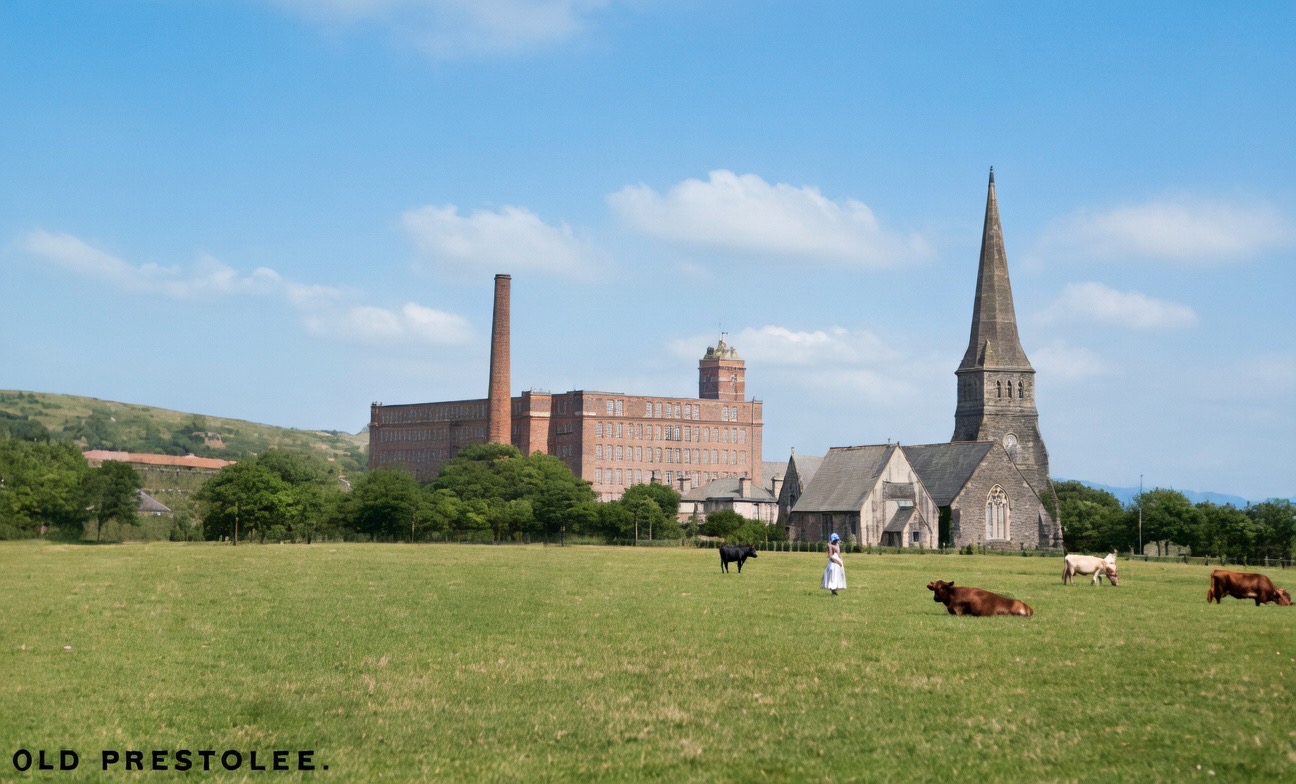
Holy Trinity Church stands at the heart of Prestolee, a village unlike any other in Greater Manchester. Nestled within a bend of the River Irwell and bordered by the Manchester, Bolton and Bury Canal, Prestolee was once a thriving industrial community of cotton mills, coal mines, canals and chemical works. In the nineteenth century the village echoed with the sounds of industry: the clatter of mill machinery, the rumble of canal traffic and the steady flow of workers making their way to factories, pits and workshops.
It is worth pausing to picture the scene as it would have appeared to a traveller on the canal in the spring of 1859. A packet boat slides past the 7½ mile marker, its captain resplendent in a dark blue coat trimmed with gold braid, a pair of sturdy horses clattering along the cobbled towpath. As the bulk of the Prestolee Cotton Mills looms ahead, the passengers look down into its shadow at activity on a plot of land below. Men are unloading stone from horse-drawn wagons. Labourers are digging foundation trenches. And standing a little apart, the architect George Shaw consults his foreman while William Jackson Rideout watches on. The church that will define Prestolee for generations is beginning to take shape.
The church was built as a memorial to Thomas Bonsor Crompton, one of the most influential industrialists in the district. More than a century and a half later, Holy Trinity remains a visible reminder of the vision, generosity and faith that shaped Victorian Prestolee.
Thomas Bonsor Crompton
Thomas Bonsor Crompton was born on 20 May 1792 into a family already deeply involved in industry. His grandfather had obtained a lease from the Duke of Bridgewater, on land at Great Lever where a paper mill and bleachworks were established. His father John built Rock Hall as a family residence but died just as it was completed, leaving three sons: John, Robert and Thomas Bonsor. The brothers divided the family enterprises between them — John and Thomas Bonsor taking the Farnworth mills, Robert taking paper mills at Wigan — but following the death of John in 1834 and the retirement of Robert in 1840, Thomas Bonsor became sole proprietor of all the family's mills.
His influence extended far beyond Lancashire. At a time when paper production was being transformed by new technology, Crompton helped develop improved methods of continuous paper drying, contributing to innovations that would be adopted across the world. He also became proprietor of several leading newspapers of the day. In 1833 he established the vast Prestolee Cotton Mills, which by the time of his death employed around 800 people and dominated the village landscape.
Although remembered as a successful businessman, Crompton was also known for his sense of duty towards the community. Contemporary accounts describe him as a firm but fair employer who encouraged self-reliance, disliked idleness and offered support to those genuinely in need. When he died in 1858 he left no children. His widow, Jane Crompton (née Rideout), survived him, but responsibility for much of the estate passed to his nephew, William Jackson Rideout — Jane's own nephew and a member of the prominent local Rideout family. It was Rideout who decided that a church should be built in Prestolee as a permanent memorial to his uncle, with support from Jane herself.
Building a Church for Prestolee
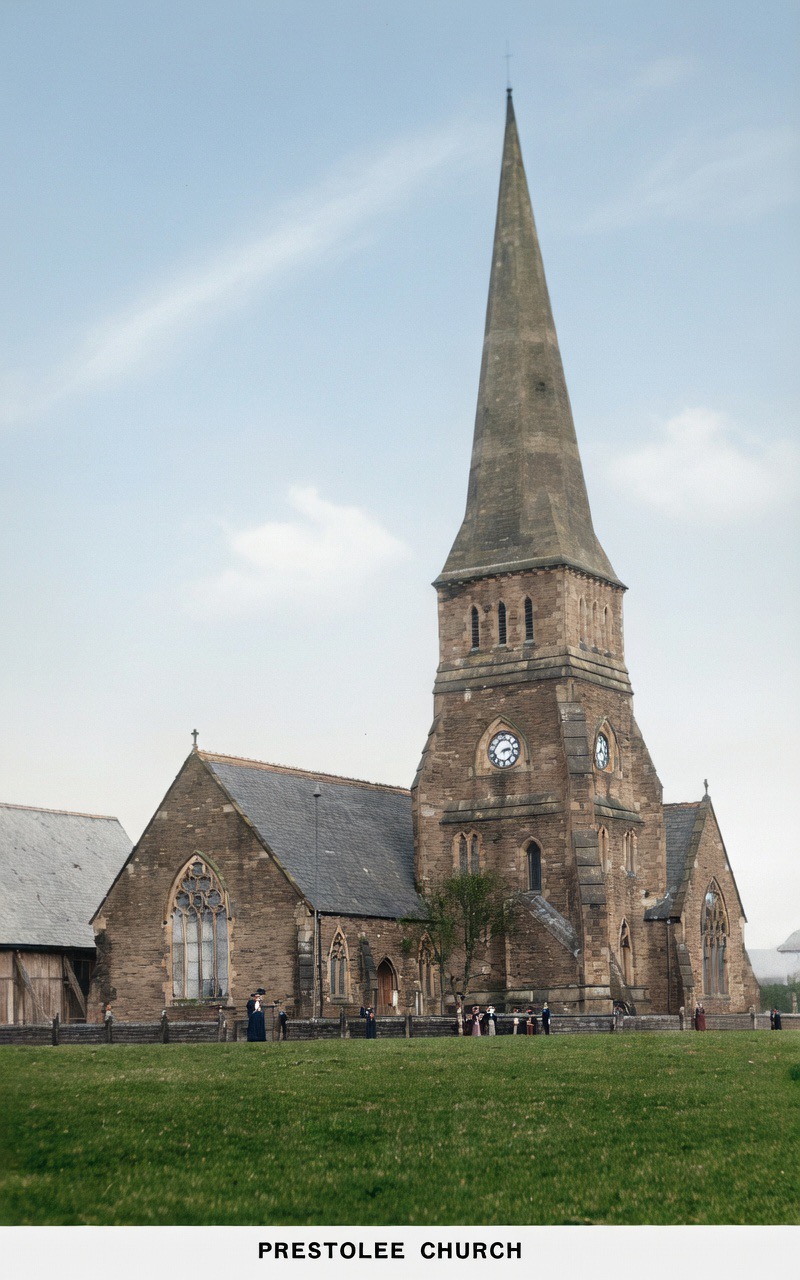
Construction began in 1859. The church was designed by the architect George Shaw and built on land belonging to the Crompton estate, overlooking the mills and canal that had shaped village life.
For three years the church gradually rose above the surrounding village. Construction was not entirely straightforward. Shortly before completion concerns arose regarding the stability of the tower and spire. A disagreement between Rideout and the architect led to part of the structure being dismantled and rebuilt before the church could be safely completed.
Meanwhile the world beyond Prestolee was changing rapidly. Charles Darwin published On the Origin of Species in 1859, provoking fierce debate throughout Britain. Across the Atlantic, the American Civil War disrupted the supply of cotton to Lancashire mills, causing hardship and unemployment during the period known as the Cotton Famine. Despite these challenges, work continued.
The First Services
Although the church had not yet been formally consecrated, the building was licensed for worship during 1862. On Easter Day, 20 April 1862, Holy Trinity held its first services. On that same day five baptisms were celebrated.
The Reverend Edwin William Appleyard, formerly of nearby St Saviour's Church at Ringley, had already accepted the role of incumbent-elect and took charge of the new church community. The parish registers reveal much about the people who attended Holy Trinity during its earliest years. Most were families of mill workers, miners and labourers. Some brought several children to be baptised on the same day. The church quickly became part of everyday life for the people of Prestolee.
Consecration Day
The formal consecration took place on Friday 19 June 1863. The service was conducted by James Prince Lee, the first Bishop of Manchester. Following the consecration, Reverend Edwin William Appleyard was formally instituted as the first incumbent of Holy Trinity Church.
The occasion was marked with considerable celebration. A luncheon for around 120 invited guests was held in the schoolroom. Among those present were Jane Crompton, William Jackson Rideout, Dr. Rushton the Vicar of Blackburn, the Vicar of Bolton, and many other clergy. Representing local industry and the gentry were Edward Wilson — owner of the alkali works at Prestolee Locks — and a certain Dr. Eames, whose son Thomas was later baptised at the church and followed his father to become a respected physician and surgeon in the district, retaining his links with Holy Trinity throughout his life. Prestolee now had a church of its own.

A Victorian Masterpiece
The newly completed church made a striking impression. Built in the Gothic Revival style, Holy Trinity combined strong architectural design with rich decoration and craftsmanship. The stained-glass windows were among its most remarkable features.
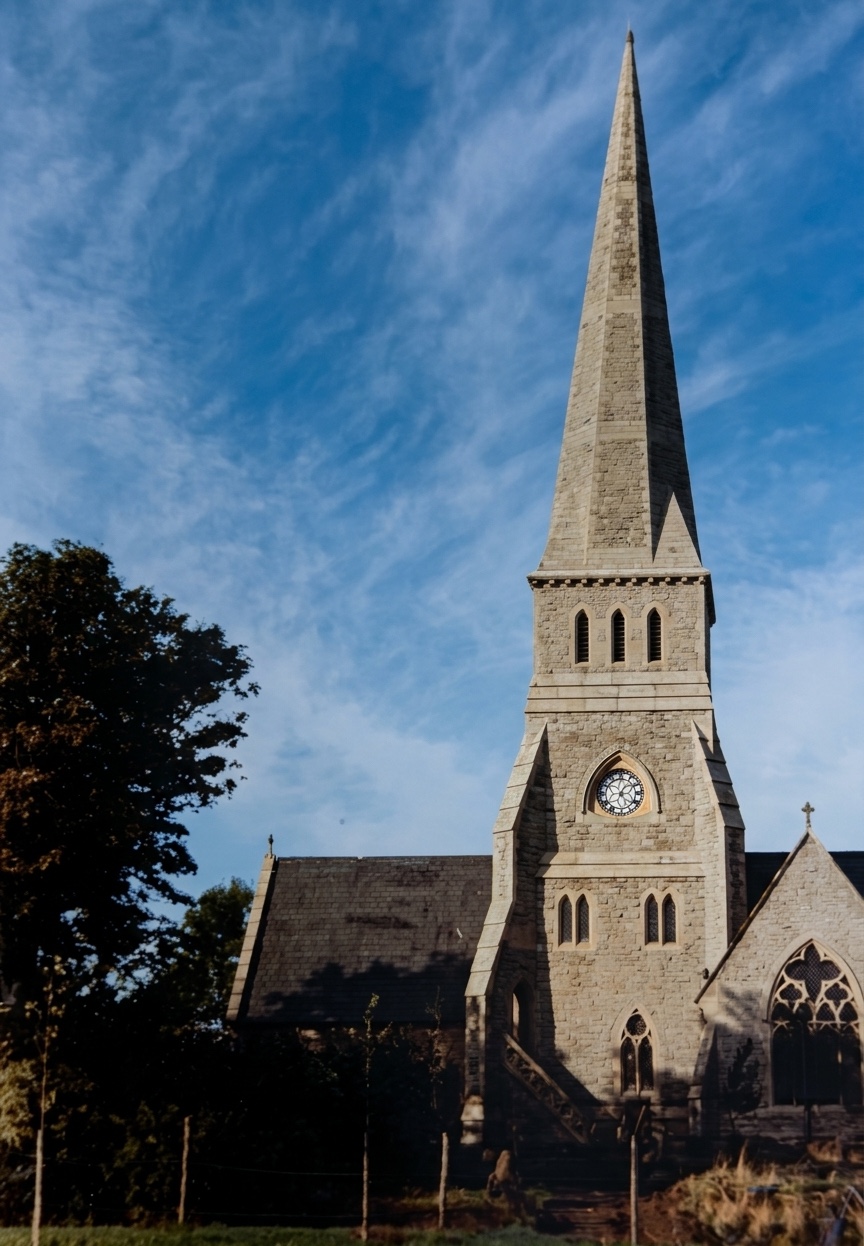
The great East Window, depicting the Crucifixion, was a gift of the patroness, Jane Crompton. The stained glass windows were the work of Messrs. Ballantyne of Edinburgh, and together they formed one of the most impressive features of the new church. The large West Window showed the Adoration of the Magi and was funded by the workers of Prestolee Mills themselves. This was no small gesture. The window cost approximately £200, a substantial sum in the nineteenth century. Most of the money was raised through subscriptions from ordinary working people who wished to honour the memory of their former employer.
The inscription beneath the window reads:
TO THE HONOUR AND GLORY OF GOD, AND IN MEMORY OF THE LATE THOMAS B. CROMPTON, BY THE PEOPLE EMPLOYED AT PRESTOLEE, SEPTEMBER 1862.
The organ, by the local firm of Kirkland and Jardine, was originally installed at the west end of the church but within a couple of years had been moved to the basement chamber of the tower. Following the death of Jane Crompton in 1864, William Jackson Rideout commissioned a further stained-glass window in the North Transept in her memory. Together these windows and the organ remain among the most significant historical treasures of the church.
Becoming a Parish
For its first twenty years Holy Trinity existed within wider parish arrangements connected to Prestwich and Farnworth-with-Kearsley. In 1883 it achieved recognition as a parish in its own right — and fittingly, it was in that same year that the first marriage was solemnized at the church. On the morning of Whit Sunday, 13 May 1883, John Thomas Nuttall married Betsy Hutton at Holy Trinity. Marriage registers and banns books began, and the church took on its full role in the sacramental life of the village. A private census taken in April 1886 found the parish's population to be 981.
By this point the church had become firmly established as the spiritual centre of Prestolee. The congregation was strong and active. Jane Crompton had established a repair fund invested in the Church Building Society, whose interest helped support the upkeep of the building. Additional funds were raised through sales of work, and one of the purchases made from these funds was a large convoluted stove to heat the church. It proved highly effective — and doubtless encouraged early attendance at services to secure the warmest seats.
Next to the church stood Prestolee House, the residence of the cotton mill manager, Mr. Woods. One can only imagine the romantic inspiration that struck him when, at his son's baptism, the child was christened Norman Irwell Woods — a name that captures the spirit of the village as perfectly as any history book could.
The Parsonage Campaign
One of the congregation's greatest achievements came during the 1880s. William Jackson Rideout had passed away on 2 February 1876, and in early 1882 Reverend Appleyard received notice of a sale of the late Rideout's property. Included in the sale was the parsonage house in which Appleyard had been permitted to live by Rideout's generosity. On the advice of the Bishop of Manchester, Reverend Appleyard attended the sale and purchased the property for £260.
The fundraising effort that followed was remarkable. Initial subscriptions raised just over £100. A grant of £75 came from the Diocesan Church Building Society. But there was still a considerable sum to find. The congregation responded magnificently. A grand bazaar held on 14 June 1883, opened by W. W. B. Hulton Esq, raised the magnificent sum of £224. Miss Rawson of Nidd Hall added a gift of £50. A further sale of work on 17 April 1884 realised £68. When all the costs of purchase, repair and conveyance were totalled, the bill came to £545 10s 10d — and the faithful people of Holy Trinity had met every penny of it. It remains one of the finest examples of parish commitment in the church's history.
Sunday School and Village Life
Education was always an important part of church life. For many years Sunday School classes were held in a room known as School Row near the junction of Church Road and Bridge Street. Later a tin mission building provided accommodation. Meanwhile the local day school was situated off Fletcher Street — now Stoneleigh Drive — almost next door to the Methodist Chapel, though within the boundary of St Saviour's, Ringley. In 1911 a newly built Prestolee day school opened its doors, and the former Fletcher Street pupils took up residence.
In 1912 a purpose-built Sunday School was erected at the top of Church Road during the curacy of the Reverend W. J. Hull. Its foundation stone was laid by Eliza Woods and a corner stone by Norman Woods of Prestolee House. Generations of village children passed through its doors. Many attended day school, worked part-time in mills or pits and still found the energy to attend Sunday School and church services. It would have been quite common in those years for families to redeem their Sunday best clothes from the pawnbroker on a Saturday — only to return them again on Monday morning.
The Sunday School building also became the social heart of the parish. Various groups within the church — the Men's Society, the Mothers' Union and others — would produce musical extravaganzas and entertainments to the great amusement of appreciative audiences. This tradition of showtime brought together the entire village and reflected the warmth and humour that had always been at the heart of Holy Trinity.
The Great War
Like communities across Britain, Prestolee was profoundly affected by the First World War. Many members of the congregation served in the armed forces. Some never returned. Their names are recorded on memorials within the church and continue to be remembered by succeeding generations. The memorials stand as a reminder that the history of Holy Trinity is inseparable from the history of the people it served.
A Changing Village
The twentieth century transformed Prestolee. Coal mines gradually closed as the industry declined. Canal traffic diminished. Then, in July 1936, a dramatic breach occurred in the canal embankment above Nob End Locks. Millions of gallons of water, together with thousands of tons of earth and debris, crashed into the valley below. Remarkably, nobody was killed. The incident effectively marked the end of the canal's commercial usefulness.
The textile industry also entered a long period of decline. Mills closed or found new purposes. Housing developments replaced older buildings and living conditions improved. The village that had built Holy Trinity was changing rapidly. Yet the church remained.
The Family Church
Throughout its history Holy Trinity developed a reputation as a family church, but this spirit became particularly vivid during the ministry of the Reverend Reginald Ladds, who became Priest-in-Charge in 1976. Ladds was described in the 1988 anniversary booklet as one of the most colourful characters in the church's history — a warm, resourceful person who brought out the best in people and utilised their talents to the full.

His family life itself reflected the spirit of Holy Trinity. Mrs. Ladds, being of Welsh extraction, gave the children Welsh forenames — and to complete the picture, the boys were each given an additional Christian name taken from the Bible. With names like Abraham and Adam, some in the parish suspected they had discovered the sons of a Jewish priest. When Avril, the couple's only daughter, was married in the church, the entire congregation shared the occasion as their own — a natural expression of what it meant to be a family church.
With Mrs. Ladds at the organ and their children in the congregation, the family helped set a style that became Reverend Ladds' trademark: the promotion of family both in, and of, Holy Trinity. As the booklet put it: "The family that prays together, stays together." The old Sunday School building was demolished during his ministry — parishioners gathered with him to take a last look at the 1912 building before it came down — but the spirit it had fostered lived on. That strong sense of belonging and shared life remains part of Holy Trinity's character today.
Holy Trinity at 125 Years
In 1988 the church celebrated its 125th anniversary with a special service on Trinity Sunday, 29 May 1988. By that time Holy Trinity had become part of the team parish of East Farnworth and Kearsley, in partnership with All Saints, St. Peter's and St. John's, under the guidance of Team Rector the Reverend Alec Courtley. After a courageous fight against illness, Reverend Courtley was destined to give up the team and move to St. Margaret of Scotland Church at nearby Heywood.
Looking back, parishioners recognised how much had changed since the first services of 1862. The mills had gone. The mines had disappeared. The canal no longer carried commercial traffic. The old Sunday School building had been demolished. Yet the church remained a place of worship, friendship and service. The anniversary booklet spoke of a symbol that had come to define the congregation — the Triangle of Love: your love to God; His love to you; and your love for each other. That triangle, the booklet said, was the source of the Flame of Holy Trinity.
The warmth within the church, the booklet concluded, came not from the old convoluted stove but from the hearts of its people. That observation remains as true today as it was in 1988.
Holy Trinity Today
More than 160 years after the first Easter service, Holy Trinity continues to serve Prestolee. The church stands as a witness to the faith of those who built it, worshipped within it and handed it on to future generations. Its story is not simply one of architecture or history. It is the story of a community. A story of mill workers and miners, clergy and benefactors, children and families. A story of faith lived out in an industrial village beside a canal. And a story that continues to be written today.
A Famous Connection
Holy Trinity on Coronation Street
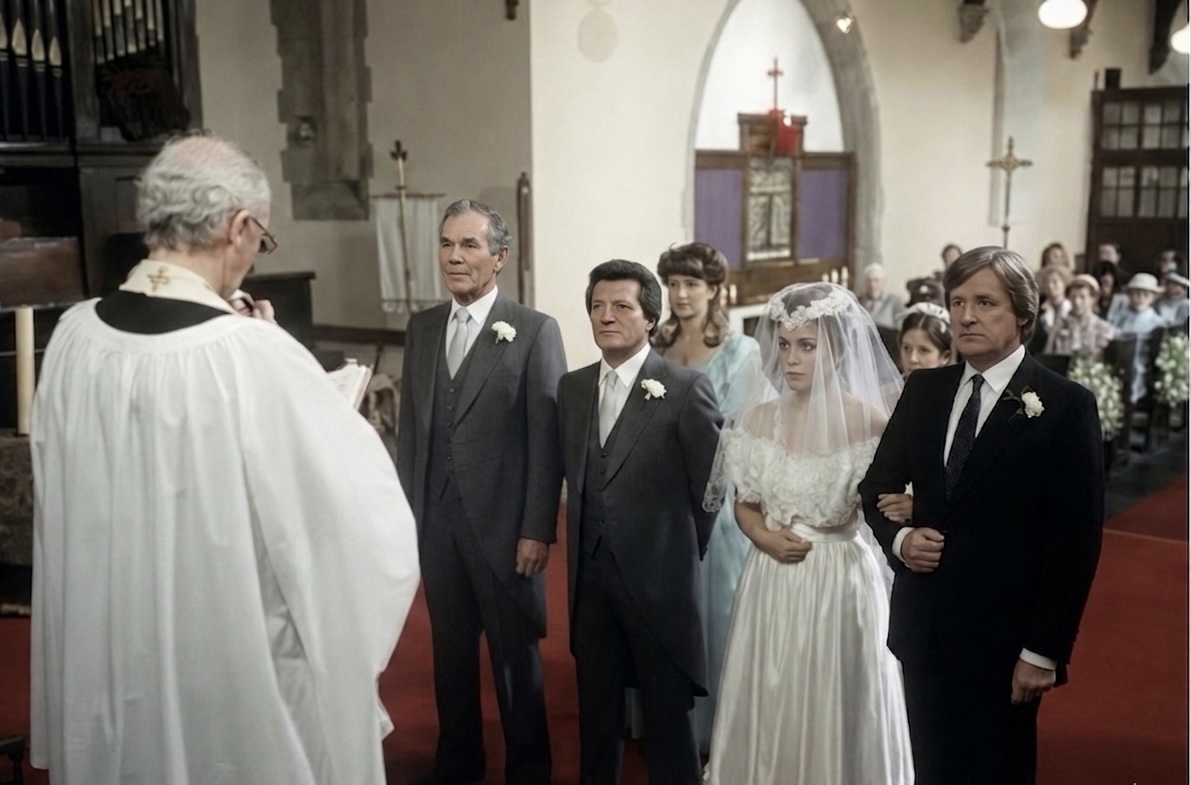
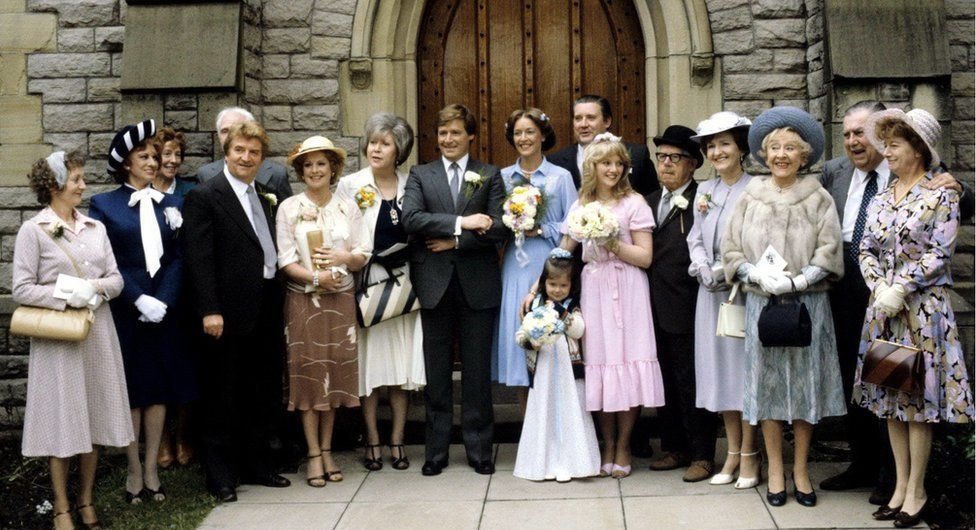
Holy Trinity became known far beyond Prestolee through its appearances on Coronation Street, one of Britain's most enduring television dramas. The church served as a filming location for many of the show's most memorable weddings, where it was known to viewers as All Saints Church, Weatherfield — the fictional parish church of the Street. The building appeared throughout the 1980s in some of the soap's most significant moments, including the wedding of Ken and Deirdre Barlow. For generations of Coronation Street fans, Holy Trinity is a place they feel they already know.
Clergy of Holy Trinity Church

| Years | Clergy |
|---|---|
| 1863–1889 | Rev. E. W. Appleyard |
| 1889–1893 | Rev. C. S. Newham |
| 1893–1907 | Rev. I. W. Brooker (Curate-in-Charge) |
| 1907–1909 | Rev. F. B. Mennier |
| 1909–1911 | Rev. M. Patterson |
| 1911–1916 | Rev. W. J. Hull |
| 1916–1917 | Rev. H. Whewell |
| 1917–1919 | Rev. W. J. White |
| 1919–1924 | Rev. C. S. Newham |
| 1924–1933 | Rev. T. Rice |
| 1933–1944 | Rev. P. W. Jenkins |
| 1944–1952 | Rev. W. B. Hodgkin |
| 1952–1957 | Rev. J. Mort |
| 1957–1963 | Rev. William Riley |
| 1963–1970 | Rev. W. E. Price |
| 1970–1976 | Rev. R. Phillips |
| 1976–1984 | Rev. Reginald Ladds (Hon. Curate-in-Charge) |
| 1984–1988 | Rev. Alec Courtley (Team Rector) |
| Late 1980s–1995 | Rev. Michael J. Williams |
| 1996–2001 | Rev. Fred Cooke |
| 2002–2007 | Rev. Cherry Vance |
| 2008–2019 | Rev. Carol Pharaoh |
| 2019–present | Fr Stephen |
Note: This clergy list is compiled from available parish records and historical sources. Some dates and details may require verification. If you have information that could help complete or refine this record, please contact the parish.
This history is based primarily upon the booklet "Holy Trinity and Prestolee (1863–1988)", compiled by Peter Noone for the church's 125th anniversary celebrations in 1988, together with parish records and later historical research.
Parish records
Holy Trinity has kept detailed records since its earliest days. Baptism registers survive from April 1862, and marriage registers and banns books from 1883. These records are held on microfilm at Manchester Archives and Local Studies (reference MFPR 2056 and MFPR 2057), and some are available online through the Manchester Archives collections at Ancestry.
For those researching family history connected to Prestolee, Outwood, Kearsley or the surrounding area, Holy Trinity's registers represent one of the most important local genealogical sources available.
A timeline of Holy Trinity
Thomas Bonsor Crompton dies, leaving no children. His widow survives him, but responsibility for the estate passes to his nephew, William Jackson Rideout. Rideout decides that a church should be built in Prestolee as a permanent memorial to his uncle.
Holy Trinity designed and built by George Shaw of Uppermill, an architect specialising in Gothic Revival churches. Built in sandstone ashlar in the Early Decorated Gothic style, with a strong west tower. The church is formed as a new chapel-of-ease within the ancient parish of Prestwich-cum-Oldham, with Ringley as the immediate mother church, to serve the growing population of Prestolee.
The first baptism is recorded — Betty Hurst of Kearsley, on Easter Day — officiated by the Revd E. W. Appleyard, Curate in charge. The registers document the broad working community the church served: colliers, engine drivers, mill workers, bleachers, stokers and boatmen.
The church is formally consecrated by the Lord Bishop of Manchester. At the same service, the Revd E. W. Appleyard B.A. of Oxford is instituted as the first Incumbent of Holy Trinity, Prestolee — having served as Curate in charge since the district's separation from Ringley.
Holy Trinity achieves full independent parish status. Marriage registers and banns books begin. In the same year, a grand bazaar is held in June, raising £224 to support the parsonage campaign — demonstrating remarkable community commitment to securing the future of their church.
A purpose-built Sunday School is erected at the top of Church Road. Its foundation stone is laid by Eliza Woods and a corner stone by Norman Woods of Prestolee House. Generations of village children pass through its doors, making it the social heart of the parish.
A First World War roll of honour is installed, commemorating local men from the parish who died in the conflict.
A dramatic breach occurs in the canal embankment above Nob End Locks. Millions of gallons of water crash into the valley below. Remarkably, nobody is killed. The incident effectively marks the end of the canal's commercial usefulness and a turning point in Prestolee's industrial history.
Three parishioners — James Coucill, Alice Ingham, and Harold Ogden Meakin — make the supreme sacrifice in the Second World War. The oak memorial board inside the church records their names in perpetuity.
Rev. Reginald Ladds becomes Priest-in-Charge and defines Holy Trinity's reputation as a Family Church. Together with his wife and children, he encourages the congregation to see church life as something shared by the whole family. His warmth and pastoral care become foundational to the church's identity, and he remains the beloved rector through the 125th anniversary celebrations in 1988.
Holy Trinity serves as a filming location for Coronation Street, appearing as All Saints Church, Weatherfield for many of the show's iconic wedding scenes.
Holy Trinity celebrates its 125th anniversary. Peter Noone compiles the parish history booklet "Holy Trinity and Prestolee (1863–1988)", documenting 125 years of worship, community, and faith. The anniversary booklet describes the church as possessing a warmth that comes from the hearts of its people.
The parish of Holy Trinity, Prestolee is united with that of St Saviour's, Ringley, forming the Parish of Stoneclough. The two congregations continue to worship separately while sharing clergy and parish governance.
Holy Trinity remains an active place of worship at the heart of Prestolee village life, under the care of Fr Stephen, who became Team Rector of the Benefice in 2019. The church is Grade II listed and recorded on Historic England's Heritage at Risk Register. Services are held on the first and third Sunday evening of each month, and the Family Healing Hub meets on the third Saturday morning.
Heritage at Risk
Holy Trinity is currently listed on Historic England's Heritage at Risk Register, which records listed buildings at risk due to their condition or vulnerability. Heritage records note some structural concerns, including issues with the tower stairs, though the church remains in active use. This is a national designation that reflects the challenges many historic church buildings face, particularly smaller congregations maintaining large Victorian stone structures.
Heritage at Risk (Historic England, 2024): The Church of the Holy Trinity, Church Road, Prestolee is recorded on the Heritage at Risk Register. Reference: 1350354. If you would like to support the maintenance and conservation of Holy Trinity, please consider making a donation to the parish.
Urgent Appeal — Guano Removal Fundraiser
Holy Trinity is currently facing a serious threat caused by years of guano build-up within the building. The contamination has now reached a critical level and specialist cleaning and restoration work is urgently required. A fundraising target of £16,000 has been set to cover the work needed. If you would like to help save this historic church — familiar to millions of Coronation Street viewers as All Saints Church, Weatherfield — please visit the Guano Removal Fundraiser page to donate or find out more.
The Parish of Stoneclough takes its responsibility for both historic buildings seriously, and any support from the community — financial or practical — is always gratefully received.